1920'S Aircraft - The Golden Age of Aviation occurred during the 1920s and lasted into the 1930s. The Golden Age of Aviation marked rapid advancements in how airplane technology and design. During World War I, better airplanes were being developed to defeat the enemy.
In the 1920s aviators improved on this technology, learning how to navigate by instruments in the cockpit of the airplane rather than sight alone. The first passenger flight took place, although it would be over the next several decades that passenger flight became commonplace and comfortable.
1920'S Aircraft
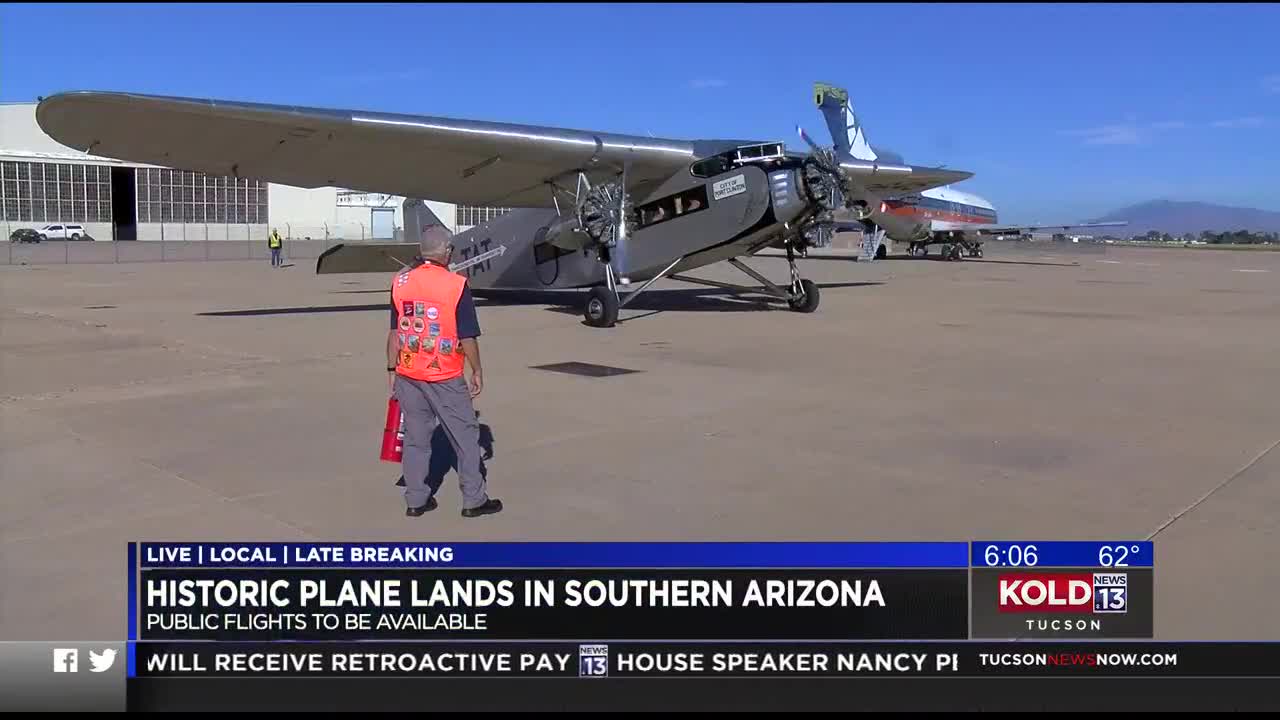
Companies and mail services began using airplanes to transport goods around the country. In time, airplanes would carry and deliver goods on a global scale. Airplanes helped the world develop into a global society. The 1920s was a decade of growth in naval aviation.
When Was The Golden Age Of Aviation?
The air arm steadily increased in size and strength while improving its administrative and operational position within the Navy. Small air detachments in each fleet proved effective during operations at sea. At the end of the decade three carriers sailed in full operation, patrol squadrons performed scouting functions, and commanders regularly assigned planes to battleships and cruisers.
2 July 1926—Congress authorized the Distinguished Flying Cross as an award for acts of heroism or extraordinary achievement in aerial flight by any member of the armed services, including the National Guard and the Reserves, retroactive to 6 April 1917.
Debates emerged in these years over the role of airpower and such issues as the role of the services in coastal defense included questions on the further need for a Navy. Naval aviators grew frustrated with their career limitations and lack of command responsibilities, and those within the aircraft industry became dissatisfied with small peacetime orders, government procurement policies, and federal competition.

Most of this was typical of new technology developing at a rapid pace, but some of these questions would persist for decades. The 1920s and 1930s were formative decades in aviation on many levels. Flight technology rapidly advanced, military and civilian aviation grew tremendously, record-setting and racing captured headlines and public interest, and African Americans began to breach the social barriers of flight.
S Airplane Design
The interwar period also witnessed the birth of modern rocketry. 20 March 1922—The first U.S. aircraft carrier Langley (CV-1) was commissioned at Norfolk, Virginia, under the command of Executive Officer Cmdr. Kenneth Whiting. The Norfolk Navy Yard had converted Langley from the collier Jupiter (AC-3), replacing each coal-handling derricks with a wooden flight deck and converting holds to hangars and fuel tanks.
Langley was named in honor of aviation pioneer Samuel P. Langley. Impressive technical progress also characterized the decade. Despite slim funds for research, radial air-cooled engines developed into efficient and reliable sources of propulsion, better instruments came into use, and an accurate bombsight became available.
Aircraft equipped with oleo struts and folding wings enhanced the operating capabilities of carriers. Each year planes flew faster, higher, and longer, and naval aviation contributed to world records. In Arctic west, with snow shoes, circa 1929-1930.
Original caption reads, “Commander Richard E. Byrd, who is undertaking the coming expedition to the Antarctic Region. This will be the most scientific expedition ever attempted. Byrd will fly over the South Pole." (Official U.S. Navy photograph, National Archives collection, 306-NT-549A-3)

Lesson Summary
8 August 1924—The rigid airship Shenandoah (ZR-1) secured to the mooring mast of the oiler Patoka (AO-9) while underway in Narragansett Bay, Rhode Island. Shenandoah remained moored to Patoka during the ship's passage to anchor off Jamestown, Rhode Island, and cast off the following day.
This achievement marked the first use of a mooring mast erected on board a ship to facilitate airship operations with the fleet. The Barron Hilton Pioneers of Flight Gallery highlights this exciting era with an eclectic collection of aircraft and other objects.
A common theme unites them. All are connected with people who pushed the existing technological or social limits of flight during the early decades of the 20th century. Each aircraft or exhibit represents an unprecedented feat, a barrier overcome, a pioneering step.
11 August 1921—The practical development of carrier arresting gear began when pilot Lt. Alfred M. Pride taxied an Aeromarine plane onto a dummy deck and engaged arresting wires at NAS Hampton Roads, Virginia. These tests resulted in the development of arresting gear for Langley (CV-1) that consisted essentially of athwartship wires attached to weights along with fore and aft wires.
Aviation In The S
18 January 1927—Lt. Cmdr. John R. Poppen, MC, reported for duty in charge of the Aviation Section of the Naval Medical School in Washington, D.C. This marked the beginning of flight surgeon training in the Navy as well as the end of an interservice agreement, in effect since 1922, by which Navy medical officers trained at the Army's flight surgeon school.

The act gave a lot of authority to the Secretary of Commerce, who then had a role in the development of air navigation systems, air routes, the licensing of pilots and aircraft, and investigations surrounding accidents.
In the 1920s, the design of the airplane was changing. Airplanes were growing larger and faster. This is because the use of airplanes was becoming more commercialized. Mail was being carried by plane. Aviators were also interested in making faster airplanes since people began to grow interested in racing airplanes.
Jimmy Doolittle was a famous airplane racer in the 1920s. Jimmy Doolittle was also an aeronautical engineer. He developed the concept of instrumental flight. Instrumental flight is using navigational instruments in the airplane to navigate when a pilot could not see, for example, they were in a cloud.
Charles Lindbergh designed his own airplane called the Spirit of St. Louis in order to make his flight across the Atlantic Ocean. This plane had to carry enough fuel to make it from New York to Paris without stopping.
25 April 1922—Pilot Eddie Stinson made the initial flight of an ST-1 twin-engine torpedo plane built by Stout Engineering Laboratory as the first all-metal airplane designed for the Navy. The aircraft possessed inadequate longitudinal stability, but its completion marked a step forward in the development of all-metal aircraft.
Used by Lieutenant Commander Richard E. Byrd, USN, and Chief Aviation Pilot Floyd Bennett, USN, on their flight over the North Pole from Kings Bay, Spitzbergen, Norway, on 9 May 1926. BA-1 is presumed to indicate Byrd Arctic One
. (Naval History and Heritage Command photograph, NH 44161) Aviation was important in the 1920s because there were many advancements in aviation at this time. As airplanes were growing larger and faster and flying for longer without stopping, famous aviators began to attempt to set records.
For example, Charles Lindbergh is credited with being the first aviator to successfully fly across the Atlantic Ocean. Barnstorming is sometimes also called a flying circus. After World War I, there were many cheap airplanes available for purchase, and many men who were pilots in the war but were now out of work.
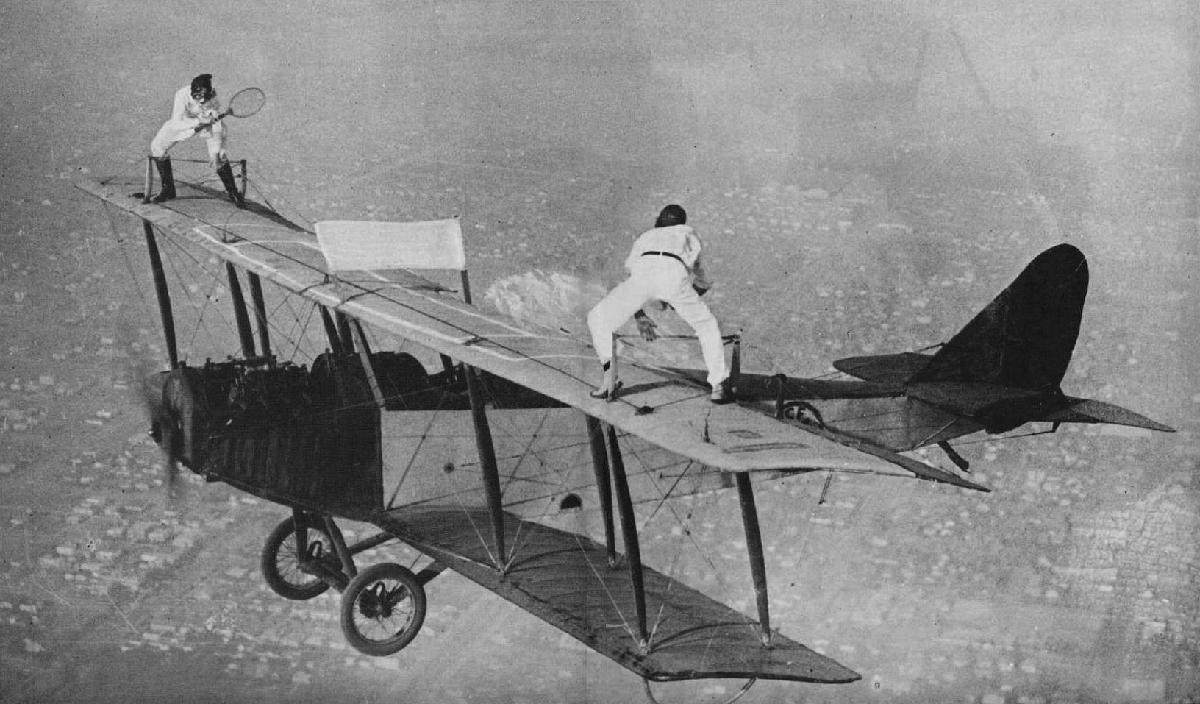
These barnstormers did aerial tricks for a paying crowd of people. Barnstorming took place at a farm and was an impromptu aerial show. Barnstormers would practice such tricks as wing walking, parachute jumping, and aerial tricks.
Barnstorming grew in popularity during the 1920s, since groups would tour around the country with their planes and pilots. Many people had never seen an airplane and this became a great attraction. 10 August 1921—A general order established the Bureau of Aeronautics and defined its duties under the Secretary of the Navy as comprising "all that relates to designing, building, fitting out, and repairing Naval and Marine Corps aircraft."

9 May 1926—Pilot Lt. Cmdr. Richard E. Byrd Jr. and Aviation Pilot Floyd E. Bennett made the first flight over the North Pole in Fokker trimotor Josephine Ford. After circling the Pole, they returned to base at Kings Bay, Spitzbergen, Norway, completing the round trip in 15.5 hours.
14 October 1922—Lt. Harold J. Brow and Lt. Alford J. Williams flew CR-2 and CR-1 racers with D-12 engines to finish third and fourth, respectively, in the Pulitzer Trophy Race at Detroit, Michigan. The planes reached speeds of 193 and 187 miles per hour.
Sailors and Marines developed innovative tactics and learned techniques of dive bombing, torpedo attack, scouting, spotting for gunfire, and operating from advanced bases. Naval pilots used their skills to turn airplanes to new uses in polar exploration and photographic surveying, and solved the basic and unique problems of taking aviation to sea.
29 November 1929—Commander and navigator Cmdr. Richard E. Byrd Jr., civilian pilot Bernt Balchen, civilian copilot and radio operator Harold June, and photographer Capt. Ashley C. McKinley, USA, made the first flight over the South Pole in a Ford 4-AT trimotor named Floyd Bennett.
The plane took off from the Little America base on McMurdo Sound at 3:29 p.m. on 28 November, reached the pole at 1:14 a.m. on the same day, stopped briefly for fuel at Axel Heiberg Glacier, and returned to Little America at 10:08 a.m.
USS Shenandoah (ZR-1) moored to USS Patoka (AO-9), circa 1924. (Courtesy of the Naval Historical Foundation. Collection of Harriet A. Harris, USN(NC)-Retired. Donated by Mrs. J.B. Redfield, 1961 (US Naval History and Heritage Command photograph, NH 98163)
airplanes of the 1920s, 1920s fighter planes, 1940's private aircraft, 1930s planes, 1930's aircraft designs, civilian aircraft of the 1930s, passenger aircraft 1920s, airlines 1920s